
Key Takeaways:
- The growing distinction between medical-use and adult-use cannabis is prompting operators to reassess how their organizations, operations, and reporting frameworks are structured.
- Clear defensible allocation methodologies may help support tax positions, strengthen compliance, and prepare cannabis businesses for evolving regulatory requirements.
- Cannabis operators with both medical and adult-use operations should evaluate whether they can accurately identify and report the revenues, expenses, assets, and activities associated with their medical cannabis operations.
—
The cannabis industry entered a new phase in April 2026 when federal regulators created a distinction between state-licensed medical cannabis operations and adult-use cannabis activities. While questions remain regarding how future tax administration and regulatory oversight will develop, one issue is already becoming clear: cannabis businesses that participate in both medical-use and adult-use markets will need to revisit their structures, allocation processes, and policies.
For many cannabis operators, medical-use and adult-use activities have historically functioned within a shared organizational structure with differentiation being primarily a point-of-sale issue. The same facilities, employees, systems, leadership teams, and vendors often support multiple business functions. While that approach may have worked when medical and adult-use cannabis faced similar federal treatment, emerging distinctions require organizations to reevaluate their current policies and procedures.
For some businesses, that assessment may involve separate legal entities. For others, it may center on strengthening accounting processes, allocation methodologies, facilities redesign and operational controls.
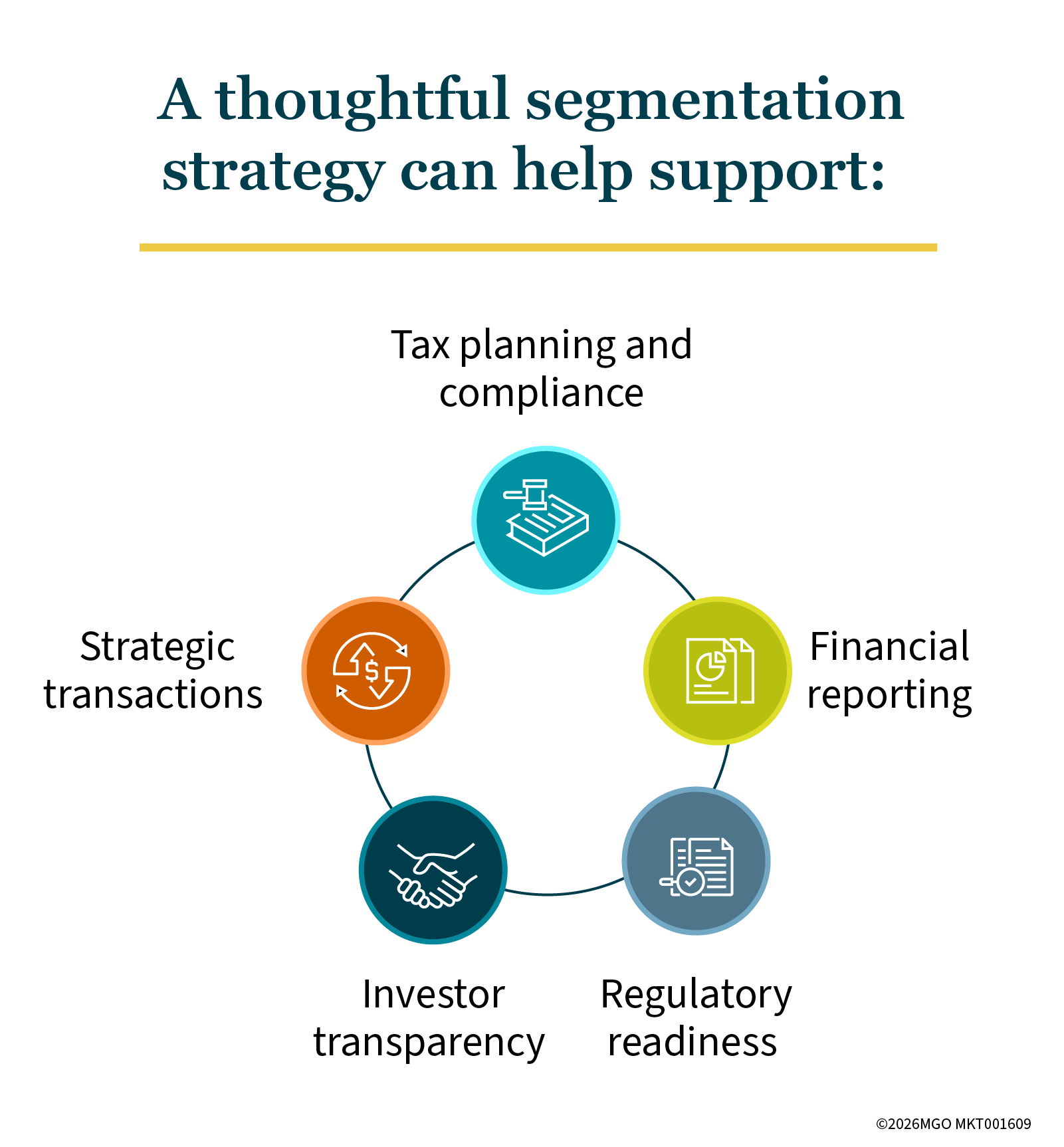
As organizations evaluate these developments, segmentation is emerging as a key consideration for tax planning, compliance readiness, financial reporting, and transaction preparation.
Why Segmentation Matters Now
Segmentation is more than organizational structure. At its core, it creates a framework that allows a cannabis business to understand, measure, and support the economics of distinct activities.
Until medical-use and adult-use cannabis align on the same regulatory and tax paths, cannabis operators with medical-use, adult-use, or dual-use licenses need to demonstrate how resources are allocated across different parts of the organization. Businesses that have not established clear reporting and allocation processes could face challenges responding to evolving tax requirements, regulatory examinations, lender requests, investor inquiries, or transaction-related due diligence.
Rather than waiting until the industry receives clarity on the rescheduling of adult-use cannabis, leadership teams should evaluate their operations now and identify where revisions to allocation methodologies or enhanced documentation may be warranted. Key questions include:
- Can we clearly identify revenues and expenses associated with each license type?
- Do we have documented allocation methodologies for shared costs?
- Are our accounting systems capable of producing the necessary level of reporting detail?
- Can we support our tax positions with sufficient documentation?
- Do our operational policies distinguish medical-use and adult-use activities where appropriate?
- Are our legal structures aligned with our business objectives?
- Could we produce reliable standalone financial information if requested by regulators, lenders, investors, or potential buyers?
- Do we understand where operational and compliance risks are concentrated?
The answers will vary based on state regulations, licensing structures, and business models. However, nearly every cannabis operator can benefit from evaluating whether the current framework provides sufficient visibility and flexibility.
What Segmentation May Involve
Segmentation does not necessarily require creating separate legal entities. Depending on state licensing requirements and business objectives, organizations may pursue segmentation through enhanced reporting structures, documented cost allocation methodologies, operational controls, facility-level procedures, entity structuring, or a combination of these approaches.
Developing Defensible Allocation Methodologies
When activities are under a common structure, cannabis operators need to develop documented and consistently applied allocation methodologies.
Examples of costs that may require allocation include:
- Payroll and employee benefits
- Occupancy costs
- Facility expenses
- Technology and software costs
- Administrative overhead
- Cost of goods sold (COGS)
- Inventory management expenses
- Professional services
- Marketing and advertising expenditures
Depending on the operating model, allocations may be based on factors such as revenue, labor hours, square footage, transaction volume, inventory activity, or other reasonable methodologies.
The objective is to create a process that is supportable, consistently applied, and capable of withstanding scrutiny from regulators, auditors, investors, and tax authorities.
Strengthening Compliance and Operational Controls
Segmentation can also help strengthen compliance efforts across a cannabis organization.
Medical-use and adult-use cannabis frequently operate under different licensing requirements, reporting obligations, inventory controls, pricing structures, and patient or consumer frameworks. As those distinctions become more significant, cannabis operators may need stronger documentation supporting how activities are managed and reported.
Clearly defining operational responsibilities, inventory procedures, financial reporting processes, and cost allocation methodologies can help a cannabis business respond more effectively to:
- Regulatory examinations
- License renewals
- Track-and-trace reviews
- Internal audits
- External audits
- Financial statement reviews
- Due diligence requests
For growing organizations, these processes can become increasingly important as operations expand across multiple facilities, jurisdictions, or business lines.
Beyond tax planning and compliance considerations, segmentation may also provide strategic benefits for organizations pursuing growth initiatives, seeking outside capital, or evaluating potential transaction opportunities.
Preparing for Capital Raises and Strategic Transactions
Investors, lenders, and acquirers increasingly expect detailed operational and financial information.
Organizations that can clearly demonstrate the performance of their medical-use and adult-use operations may be better positioned when pursuing financing, undergoing due diligence, or evaluating strategic opportunities.
A thoughtful segmentation strategy can make it easier to present meaningful financial information and provide stakeholders with greater transparency into the underlying economics of the business.
How MGO Can Help
Executing the above requires more than reviewing organizational charts. It often involves assessing tax considerations, accounting processes, financial reporting frameworks, operational procedures, internal controls, compliance requirements, governance practices, and transaction readiness.
MGO’s dedicated Cannabis practice helps cannabis operators evaluate business structures, develop reporting frameworks, assess allocation methodologies, strengthen internal controls, and prepare for evolving regulatory requirements. Our multidisciplinary team can help you assess practical approaches to segmentation and identify opportunities to create greater clarity, flexibility, and preparedness.
Reach out to the MGO Cannabis team to discuss how a segmentation assessment may support your organization’s long-term goals.