
Key Takeaways:
- The OBBBA makes the New Markets Tax Credit program and Opportunity Zones permanent, unlocking long-term planning strategies.
- State tax credit transfer markets are expanding rapidly, creating new liquidity and structuring options.
- Taxpayers must carefully track geography, compliance burdens, and investor demand to capture full value.
—
In an era of higher interest rates and rising development costs, access to liquidity and tax-efficient financing is a strategic priority. Fortunately, recent changes in the tax code are expanding the range of tools available to private companies, developers, and investors. From transferable state tax credits to permanent community investment incentives, the One Big Beautiful Bill Act (OBBBA) opens the door to longer-term planning and new monetization strategies.
Three areas stand out for their impact: the expansion of state credit transfer markets, the permanent extension of the New Markets Tax Credit (NMTC) program, and sweeping updates to Qualified Opportunity Zone (QOZ) rules.
State Tax Credit Transfers: A Maturing Market
Following the enactment of the OBBBA, many states are rapidly expanding transferable tax credit programs across sectors including:
- Clean energy
- Affordable housing
- Infrastructure and broadband
- Historic rehabilitation and film production
These credits can now often be sold to third parties, unlocking cash for developers or businesses that cannot fully use the credits themselves.
How It Works
- Taxpayer generates a credit through qualifying investments.
- The credit is transferred (sold) to a buyer at a negotiated discount.
- The buyer applies the credit against state tax liability.
Some states require pre-approval, certification, or volume caps. Others operate open marketplaces with streamlined rules.
Emerging Infrastructure
To support this growing market, states and intermediaries are:
- Launching online broker platforms
- Introducing credit insurance products to manage risk
- Streamlining documentation and reporting requirements
The movement mirrors the success of Section 6418 federal credit transfers and may unlock substantial cash flow for qualifying companies.
Planning Considerations for State Credit Transfers
Taxpayers pursuing state-level incentives should:
1. Evaluate Eligibility Early
Rules vary widely. Some states have strict geographic, sector-based, or pre-approval criteria. Early-stage planning can determine eligibility before costs are incurred.
2. Monitor Supply and Demand
Credit pricing is driven by supply, demand, and buyer risk tolerance. Credits from states with high corporate tax burdens and favorable rules tend to trade at stronger prices.
3. Engage Advisors and Brokers
Legal and tax advisors can help document eligibility, assess recapture risk, and navigate reporting requirements. Broker platforms may improve pricing and help match reliable counterparties.
4. Coordinate With Federal Credits
Many state credits can be combined with federal credits (e.g., Section 48, 45L, or NMTC). Planning at the entity and investor level can improve after-tax returns across the capital stack.
NMTC Program Made Permanent
The NMTC program was previously set to expire in 2025. The OBBBA makes the program permanent with an annual $5 billion allocation cap.
What Is NMTC?
The NMTC program incentivizes investment in low-income communities through subsidized loans with:
- Below-market interest rates
- Interest-only terms
- Principal forgiveness after seven years
Loans are made to qualified active low-income community businesses (QALICBs) by community development entities (CDEs) that receive allocations from the Community Development Financial Institutions (CDFI) fund.
Eligible Use Cases
- Real estate development
- Facility and equipment purchases
- Manufacturing or health care expansions
- Charter schools and workforce programs
Note: Sector restrictions include farming and residential rental housing
Planning Considerations for NMTCs
Thoughtful planning plays a key role in NMTC success:
1. Act Early
CDEs allocate funds based on community impact, geography, and alignment with strategic priorities. Early project outreach increases the odds of selection.
2. Build a Strong Application
Businesses should document:
- Job creation or retention
- Service to underserved communities
- Support from community stakeholders
- Project viability and timeline
3. Work With Experienced Advisors
NMTC financing structures are complex. A qualified tax advisor can help ensure the business benefits from the permanent cash subsidy and avoid compliance pitfalls.
Opportunity Zones: Permanence With New Rules
The OBBBA also makes the Qualified Opportunity Zone (QOZ) program permanent — but with material changes that affect both timing and structure.
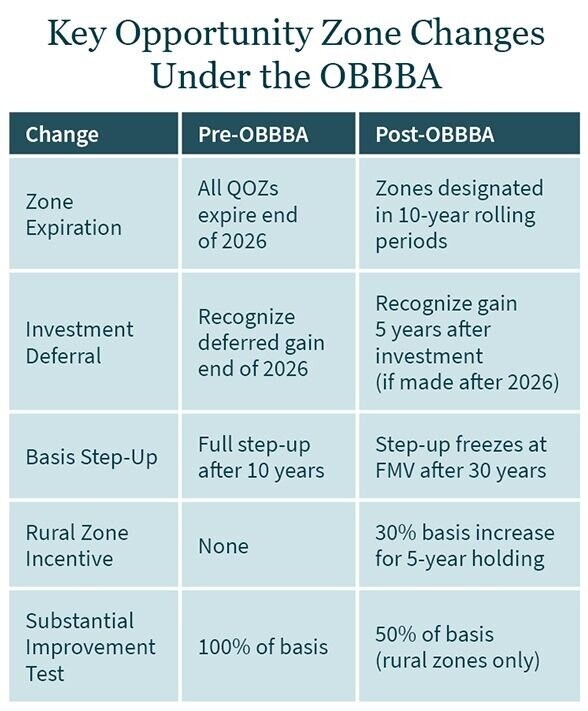
These updates expand the use case for long-hold, tax-free investing while incentivizing new geographic areas, especially rural communities.
Planning Considerations for Opportunity Zones
When planning Opportunity Zone investments, you should:
1. Time Capital Gains Strategically
Investments made after 2026 allow for deferral and a five-year recognition window. Delaying taxable gain realization may improve long-term benefits.
2. Watch for Redesignation
Current zones expire in 2026. Future eligibility depends on whether locations are re-designated under new criteria. Fund managers and companies investing in QOZs should monitor geographic trends closely.
3. Prepare for Increased Reporting
The OBBBA adds new reporting requirements for both qualified opportunity funds (QOFs) and qualified opportunity zone businesses (QOZBs), effective for tax years beginning after enactment. New systems may be required to track and disclose data not previously required.
Turning Incentives Into Strategic Advantage
From state credit transfers to NMTC financing and long-term Opportunity Zone planning, today’s incentive programs offer powerful tools to fund growth, attract investment, and manage tax exposure. The OBBBA may shorten some eligibility windows — but it opens others, especially for companies and investors that plan early and align with shifting policy priorities.
MGO helps private companies, fund managers, and investors navigate this evolving landscape. We identify applicable credits, structure deals to enhance after-tax value, and support compliance for credit transfers or long-hold benefits. If you’re planning a project or exploring monetization options, now is the time to act.